How to Optimize Your Local SEO to Rank for “Near Me” Searches

Share


Summary
Ranking for “near me” searches requires optimizing local listings, unbranded keywords, reviews, and visual content across search, maps, social, and AI platforms to capture high-intent local traffic.
“Near me” searches have transformed how consumers discover local businesses. According to the 2025 Consumer Behavior Index (CBI), 83% of consumers still use search engines like Google or Bing to find local businesses—but 73% also discover them on social media, and nearly 20% now turn to AI assistants such as ChatGPT or Gemini.
Visibility has expanded beyond traditional search, and optimizing for “near me” queries now means being discoverable everywhere consumers look.
The 12-Year Rise of “Near Me” in SEO
Over the past decade, searches containing “near me” have exploded. They peaked in July 2021 with an interest score of 100 and remain high today, showing that local intent is here to stay.
Searches like “restaurants near me”, “jobs near me”, and “stores near me” continue to dominate. But the 2025 CBI revealed an important shift—42% of consumers now use unbranded, generic terms such as “coffee near me” instead of brand names.
That means ranking for “near me” searches isn’t about brand awareness anymore—it’s about local relevance and intent-driven visibility.
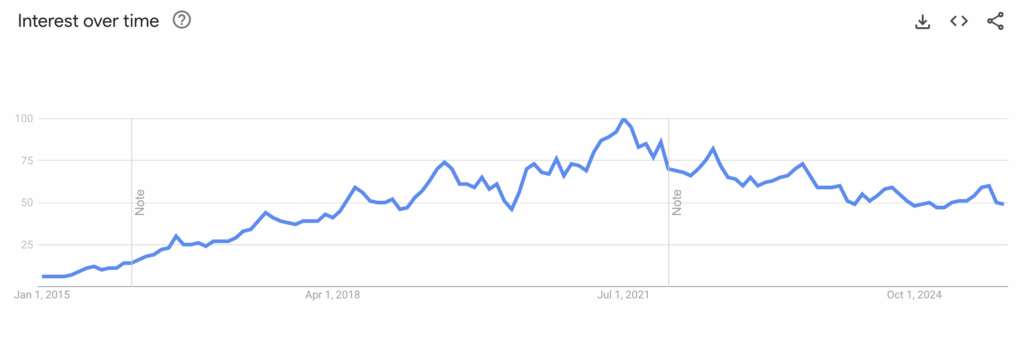
The graph below depicts the “near me” search term in the United States over the past 9 years.
Smartphones and AI Lead the Way
Smartphones remain the top driver of “near me” searches, but AI is quickly joining the mix. Nearly one in five consumers now use AI tools to find recommendations, with Gen Z leading the trend.
The takeaway? A customer might search “best bubble tea near me” on Google Maps, check TikTok for visuals, and ask ChatGPT for reviews—all within the same decision journey. Consistency across these channels is what wins the click (and the visit).
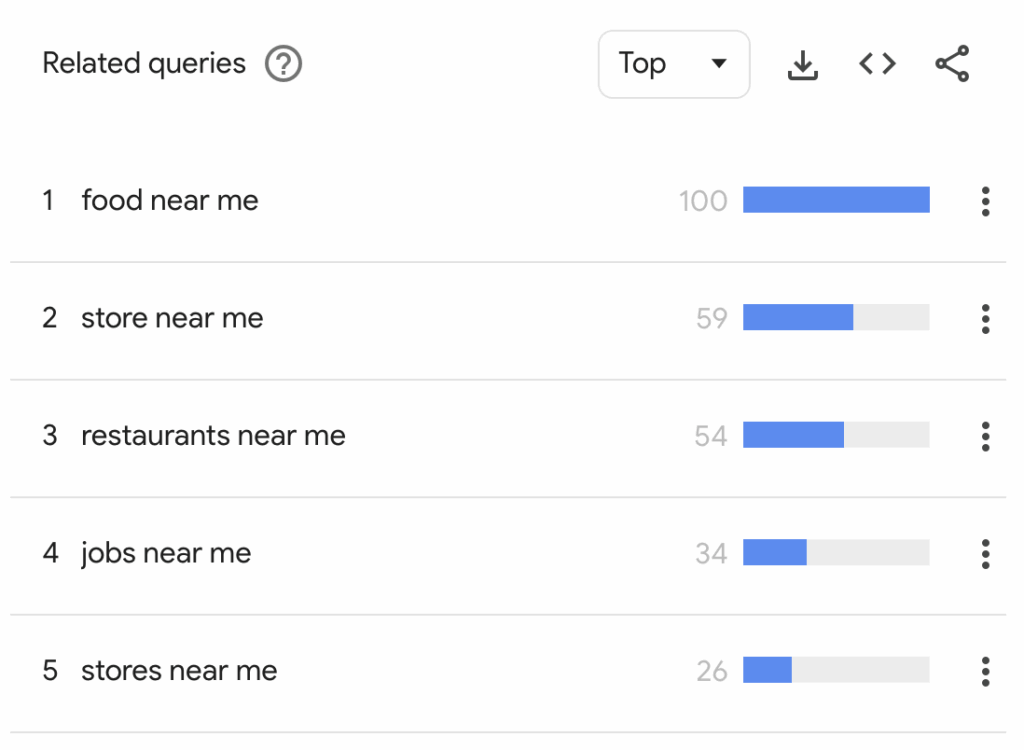
Top Related “Near Me” Queries
What Actually Impacts “Near Me” Rankings
Google ranks local results based on three primary factors:
- Relevance: How well your listing matches what users are searching for
- Proximity: Distance from the searcher’s current location
- Prominence: How well-known and well-reviewed your business is across the web
The 2025 CBI found that accuracy, convenience, and customer feedback are now the top three factors influencing where consumers choose to visit. Even small errors—like outdated hours or inconsistent NAP data—can push potential customers toward competitors.
1. Claim and Optimize Your Google Business Profiles
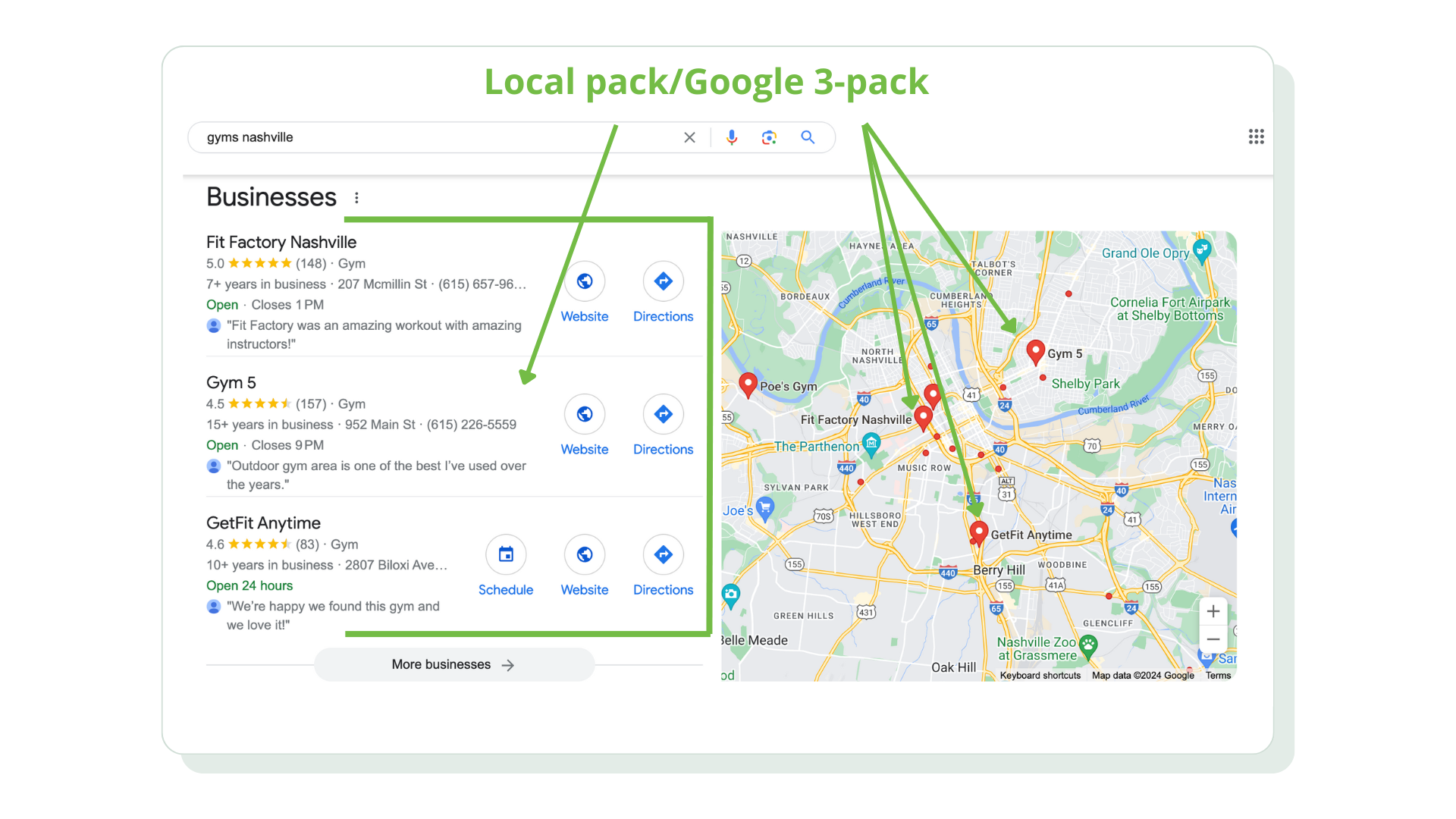
Your Google Business Profile (GBP) is your digital storefront. Businesses that rank in Google’s local 3-pack earn 126% more traffic and 93% more actions than those ranked below.
To optimize your GBP:
- Keep your Name, Address, and Phone consistent.
- Update hours, especially around holidays or events.
- Add photos, videos, and attributes (e.g., accessibility, amenities).
- Respond to reviews promptly.
- Enable features like mobile ordering, reservations, or scheduling to convert searchers immediately.
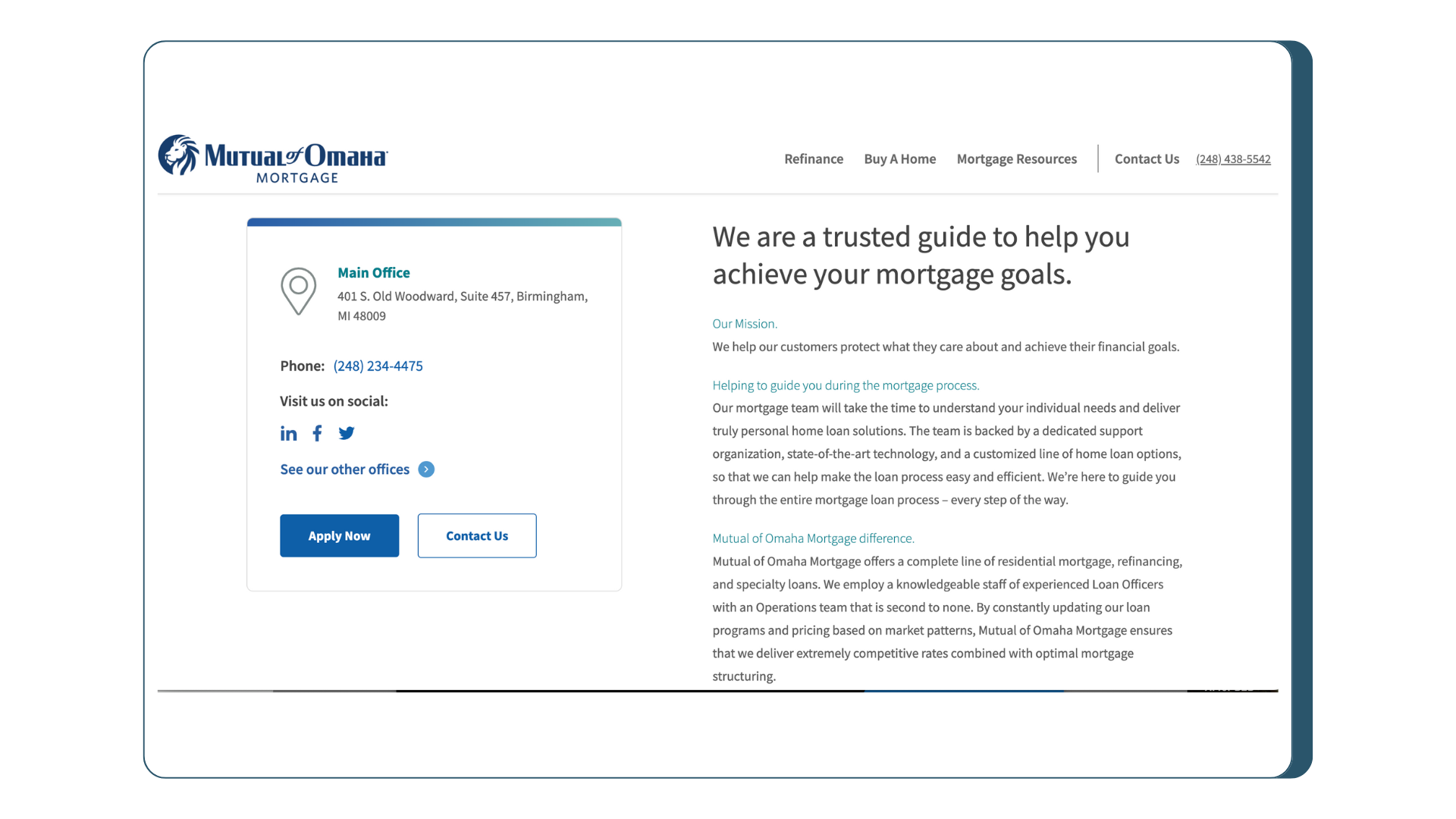
2. Create Local Landing Pages That Match Search Intent
For multi-location brands, local landing pages are essential for building relevance. Each page should include:
- City-specific keywords (e.g., “emergency dental care in Austin”)
- SEO-friendly URLs and meta descriptions
- Customer reviews and user-generated content
- Clear calls-to-action and mobile-first design
Read more: 3 Ways to Enhance Local Visibility with Unbranded Search emphasizes optimizing for unbranded keywords to capture the 63% of local searches that don’t include brand names. This approach drives high-intent, ready-to-buy traffic.
Pro tip: Link these location pages to related blog content using keyword-rich anchor text to strengthen your internal SEO structure.
3. Build Proof Through Reviews and Visual Content
91% of consumers read reviews before visiting a local business, and 65% are more likely to choose a business that responds.
To build proof that drives trust:
- Encourage satisfied customers to leave reviews.
- Respond quickly and authentically to all feedback.
- Add fresh, high-quality photos and videos regularly.
As 3 Ways to Increase Local Sales with Unbranded Search explains, businesses that consistently update photo content see stronger performance in local results—and higher conversion rates.
4. Optimize for Unbranded and Conversational Search
Generative AI has changed how people search. Your content now needs to perform in both traditional search and AI-driven recommendations.
Here’s how:
- Write in natural, conversational language that answers real questions.
- Add detailed, local information (hours, services, amenities).
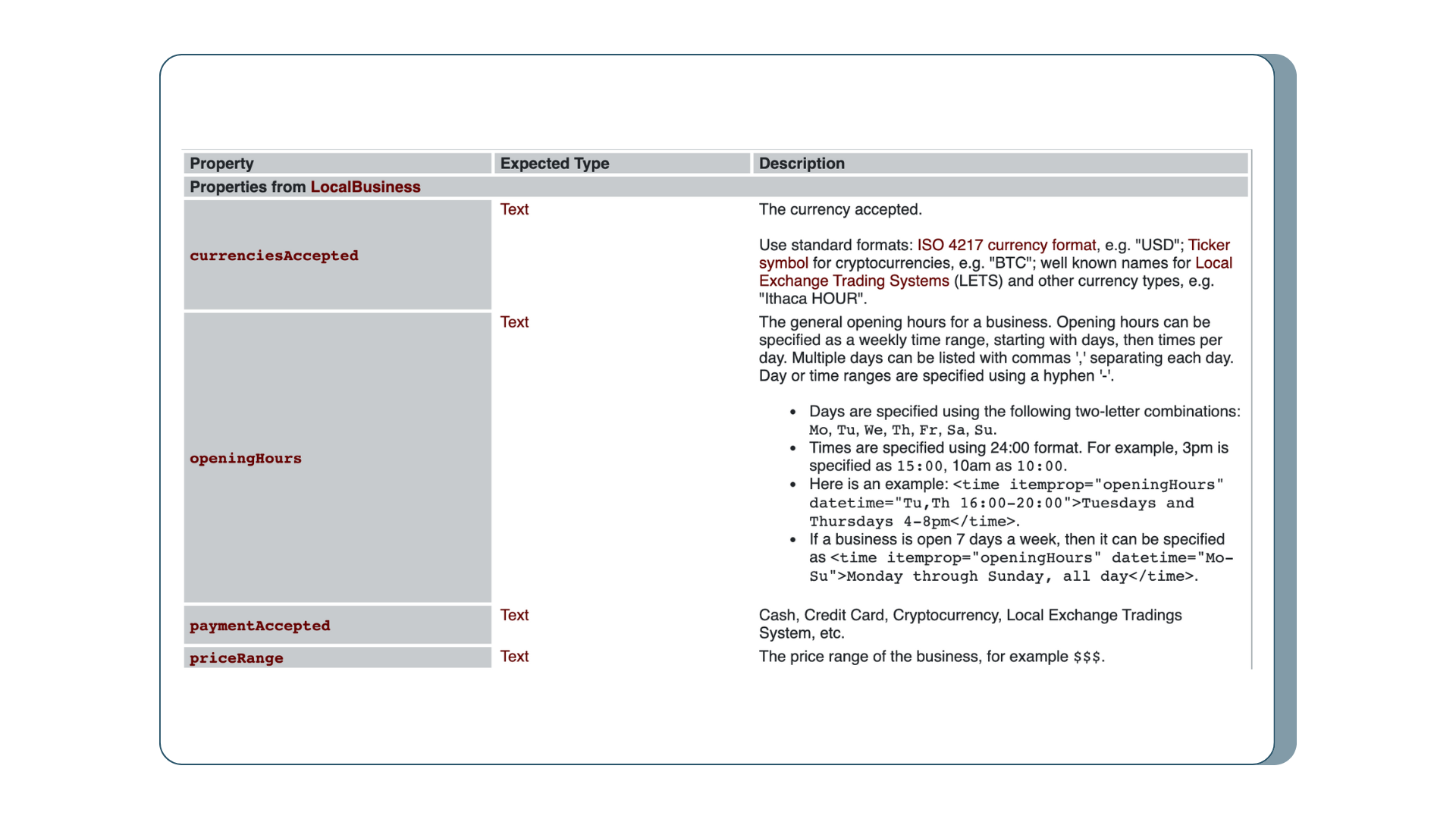
Use schema markup for structured data like openingHours and priceRange.
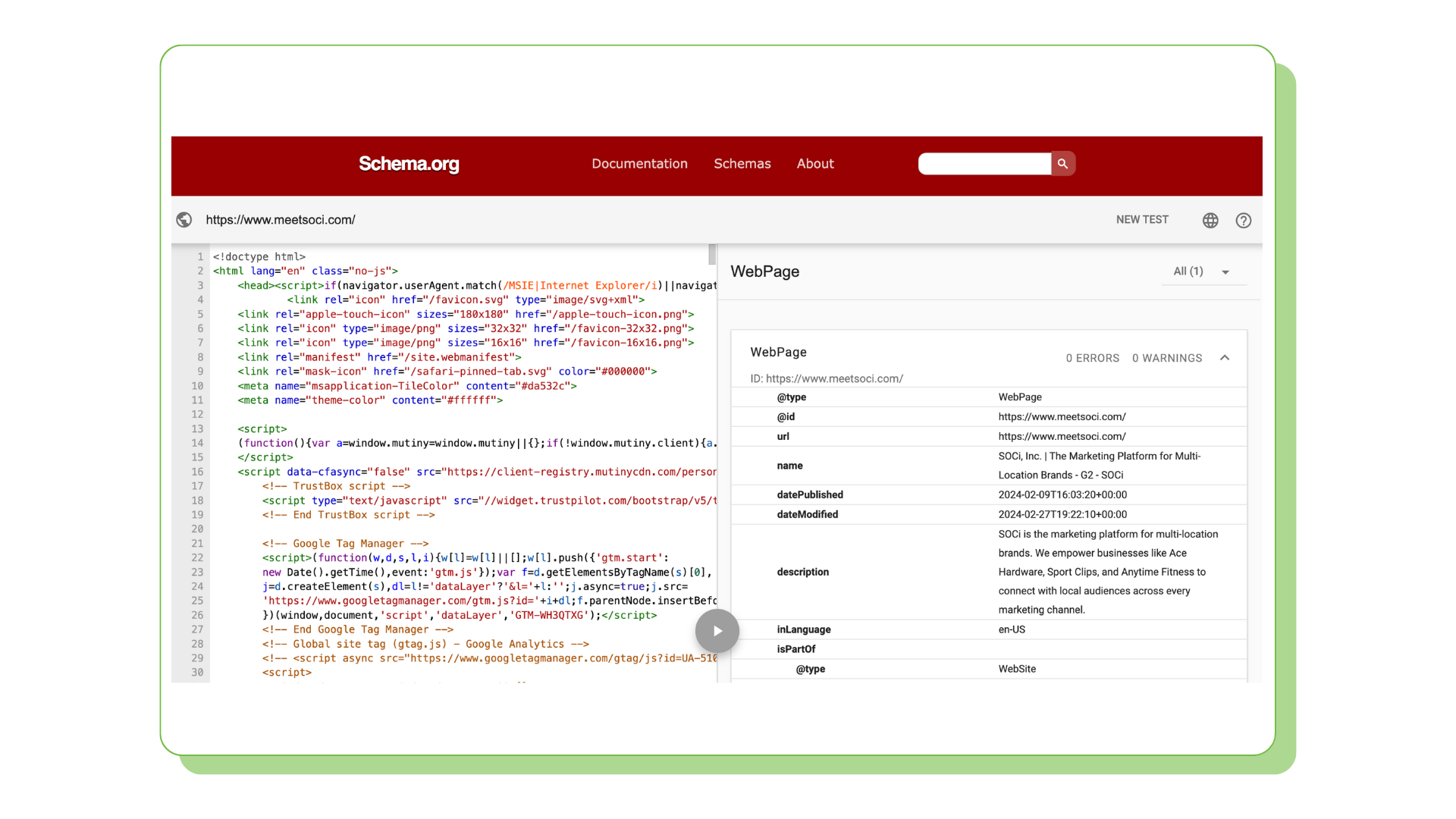
Rich, structured content helps your brand appear when consumers ask AI tools for the “best [service] near me.”
5. Empower Local Teams and Go Omnichannel
The 2025 CBI found that consumers use an average of 3.6 platforms before deciding where to go. That makes local visibility across social, search, and AI platforms critical.
Encourage your local teams to:
- Post authentic updates on TikTok, Instagram, and Facebook.
- Highlight community events, staff stories, and promotions.
- Engage directly with customers through comments and reviews.
This approach builds authenticity—a key trust signal for younger, discovery-driven consumers.
6. Monitor and Improve Continuously with AI Tools
AI isn’t replacing SEO—it’s refining it. Tools like SOCi’s Genius Search and Genius Reviews use real-time data to help multi-location brands:
- Optimize listings for accuracy and performance
- Improve response times to reviews
- Identify location-specific visibility gaps
By automating insight collection and local updates, you can stay ahead of competitors and adapt faster to shifts in consumer behavior.
“Near Me” Is Just the Beginning (H2)
The 2025 Consumer Behavior Index makes one thing clear: discovery no longer happens in one place. Consumers move fluidly between Google, social, maps, and AI assistants—often in the same session.
Ranking for “near me” searches now means showing up everywhere they look. Start with accurate listings, build locally relevant content, and embrace unbranded search. Then, use AI insights to fine-tune your presence continuously.
Because in 2025, visibility isn’t just about being found—it’s about being chosen.
Ready to turn “near me” visibility into real-world growth?
Request a demo to see how SOCi’s AI-powered platform helps multi-location brands dominate in local search, reputation, and social.