Local Memo: TikTok Tops Social Apps as a News Source for Young People; Service Areas are NOT a Local Ranking Factor; Google Now Moderating Review Responses

Share


Summary
In this week's post, learn about TikTok's role as a news source for younger users; more evidence that service area is not a Google ranking factor; and Google's new moderation program for review responses.
TikTok Tops Social Apps as a News Source for Young People
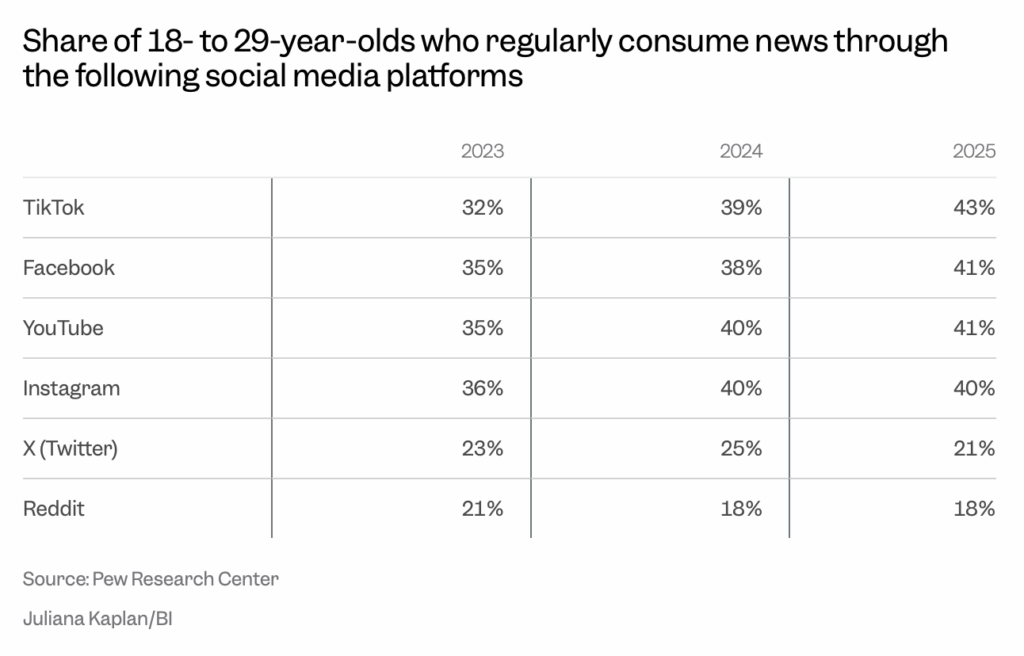
The News: New survey data from the Pew Research Center shows that TikTok has become the most popular social app for news among Americans aged 18–29, overtaking traditional favorites like YouTube and Instagram.
In 2025, 43% of young adults reported regularly getting their news from TikTok, compared with 41% for YouTube and Facebook and 40% for Instagram. Other platforms such as X and Reddit lagged further behind, with 21% and 18% respectively. Overall, social media remains the dominant source of news for this age group, with 76% saying they often or sometimes turn to social platforms for current events.
Takeaway for Multi-Location Brands: This shift presents both an opportunity and a challenge. TikTok is no longer just a place for trends and entertainment—it’s where consumers discover what’s happening nearby and who’s relevant in their community. Businesses that show up with authentic, timely content—such as event participation, local partnerships, behind-the-scenes updates, or quick reactions to trending topics—are more likely to be seen as part of the local conversation. Visibility on TikTok can directly influence foot traffic, brand trust, and word-of-mouth discovery.
More Confirmation Service Areas are NOT a Local Ranking Factor
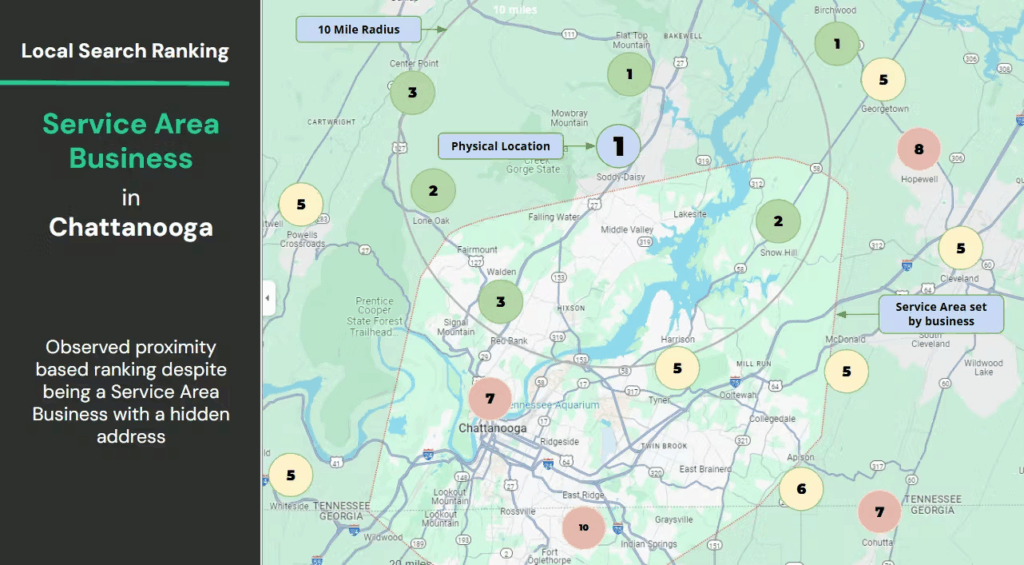
The News: Google has never treated service area businesses, or their customers, fairly in search results. For local businesses that provide a service outside of their physical location, their designated service area should be considered a part of that business’s extended location and considered equally “in proximity to” across the area they’ve set. And for customers who are just looking for the best person for the job, proximity isn’t typically an issue if that business is willing to come to them.
But, as the data has shown time-and-again, Google appears to apply the same single-point proximity logic to a service area business as a typical brick-and-mortar store regardless of the service area set. This applies equally to businesses that hide their address.
Source: SOCi
In a recent LinkedIn post, Claudia Tomina at Reputation Arm provides strong evidence that this is likely by design. In a closer look at the Google API data leak from earlier this year, Claudia found that Service Area data is being used for informational (UI) purposes, rather than for ranking.
“This line from the proto documentation says it all: “WARNING: This proto is not meant to be used directly.” Translation: This is backend storage for display and internal geo-consistency not an input to the ranking model. If service areas were part of ranking logic, they wouldn’t warn engineers not to use them directly.
What This Means for Multi-Location Brands: Authority building is the only way to truly extend GBP visibility outside your immediate proximity. Grow reviews, build your local social presence, get mentions, and post about where you’ve been. Be the best answer across your service area.
Google Now Moderating Review Responses
The News: Earlier this year, when Google let us know they were sunsetting their Q&A feature, they hinted that the future of answers was not just in customer reviews, but in the responses to those reviews. So it’s no surprise that Google has confirmed they are now reviewing those responses to ensure they are in compliance with Google’s content guidelines. Per Google’s help page for managing customer reviews: “If your reply isn’t approved to be posted, you’ll be asked to edit it. Replies usually take up to 10 minutes to review, but sometimes a review can take up to 30 days.”
What This Means for Multi-Location Brands:
Review responses may take longer to post in 2026. To ensure your response is posted quickly and without issue, respond to customer feedback promptly and professionally, and avoid content-policy violations such as keyword stuffing, excessive promotion, spammy language, or irrelevant information in responses.