The Components of AI: 5 Core Building Blocks (Plus the Branches They Power)
Share


Artificial intelligence (AI) adoption continues to accelerate rapidly, significantly reshaping how consumers discover and interact with local businesses. SOCi’s own Consumer Behavior Index has found that 19% of consumers regularly use AI platforms such as ChatGPT, Perplexity, and Google Gemini to find local businesses. Traditional search traffic has also declined by 10% year over year as consumers adopt more diverse, discovery-driven paths across platforms like TikTok, Instagram, and AI-driven recommendation engines.
This shift, championed by companies such as Google and OpenAI, positions AI as a central platform that consumers regularly use to research and discover local businesses. Since the release of ChatGPT in November 2022, adoption and general interest in AI have steadily grown.

Since the release of ChatGPT in November 2022, adoption and general interest of AI has steadily grown.
What Are the Components of AI?
AI systems are generally built from five core components that work together to let a machine perceive, reason, and act. Artificial intelligence refers to a machine’s capability to perceive, analyze, synthesize, and infer information, performing cognitive functions similar to those of the human mind.
1. Learning
Learning allows AI to adapt and improve from experience and data. This involves pattern recognition, data labeling, and feedback loops for reinforcement based on outcomes.
Example: AI-powered local SEO tools continuously learn from user interactions and search patterns to optimize business listings and improve ranking visibility.
2. Reasoning and Decision Making
Reasoning enables AI to use logic, algorithms, and predictive analytics to make informed decisions or inferences from complex datasets.
Example: AI-driven marketing analytics platforms interpret user behavior and make personalized recommendations for local marketing campaigns.
3. Problem Solving
Problem-solving capabilities enable AI to interpret data, apply analytical processes, and produce solutions tailored to specific business challenges.
Example: Chatbots powered by ChatGPT and Google Gemini resolve customer queries efficiently by understanding context, customer history, and product knowledge.
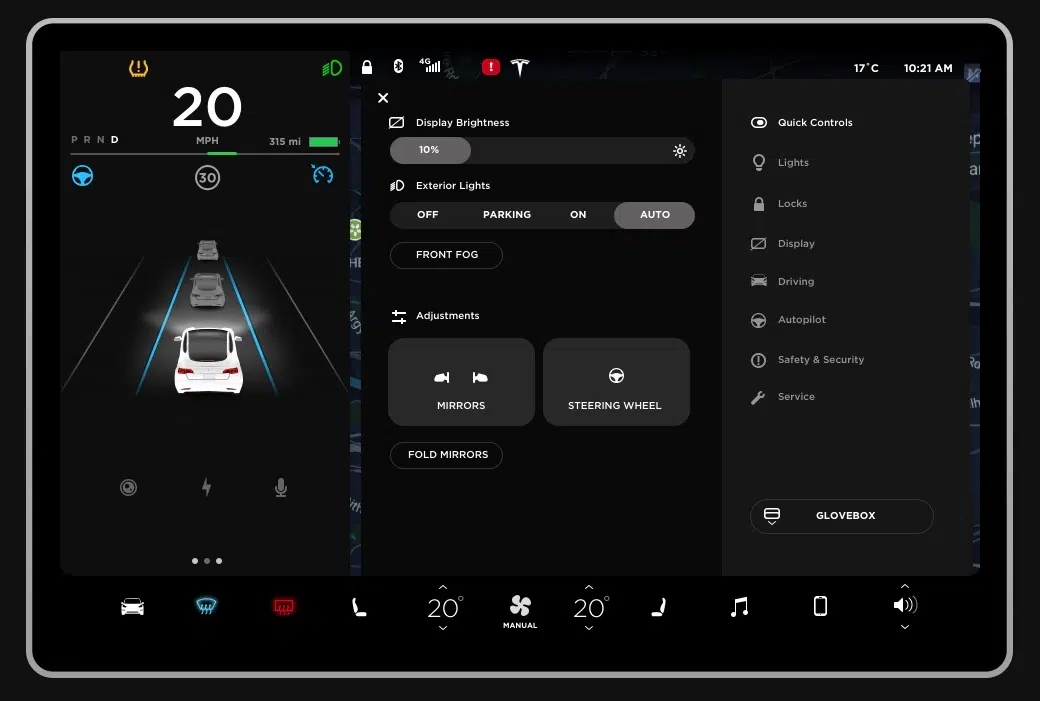
4. Perception
Perception involves AI’s ability to use sensory inputs to recognize, categorize, and respond to environmental stimuli.
Example: Self-driving cars gather visual data to recognize roads, lanes, and obstacles, then map these objects.
Courtesy of TechCrunch
5. Generative Capability
Generative AI enables autonomous creation of content such as text, images, audio, and video, often indistinguishable from human-produced content.
Example: Large language models like GPT-4 (ChatGPT), Perplexity, and Google Gemini generate human-like written content for blogs, social media posts, and customer engagement communications.
The Five Branches of AI
Below are the five most significant branches, or subfields, of AI.
1. Machine Learning
Machine Learning (ML) empowers systems to improve automatically by learning from data without explicit programming.
Example: Location-based advertising platforms predicting optimal marketing channels for different regions based on historical campaign performance.
2. Deep Learning
Deep Learning (DL), a specialized subset of ML, employs artificial neural networks to analyze vast datasets and identify subtle patterns.
Example: Voice-enabled virtual assistants refining speech recognition and conversational accuracy by continuously analyzing user interactions.
3. Natural Language Processing
Natural Language Processing (NLP) enables computers to comprehend, interpret, generate, and respond naturally to human language.
Example: Sentiment analysis tools like Perplexity help businesses monitor brand reputation by analyzing online reviews and social media feedback in real time.
4. Robotics
Robotics integrates multiple AI technologies, like perception, ML, and NLP, to enable machines to perform tasks autonomously or semi-autonomously.
Example: Delivery robots enhancing local logistics and operations efficiency by automating package distribution within geographic areas.
5. Fuzzy Logic
Fuzzy logic addresses complexities where data isn’t clearly binary, allowing AI to process ambiguous scenarios effectively.
Example: Adaptive traffic control systems managing urban congestion by dynamically adjusting signals based on real-time conditions.
Learn more: What is AI?
Emerging Branches of AI
1. Generative AI
Generative AI specifically refers to AI systems capable of generating original content.
Example: Tools like DALL-E and Midjourney creating customized marketing visuals.
2. Explainable AI (XAI)
Explainable AI (XAI) aims to make AI decision-making transparent and understandable, crucial for automated decisions.
Example: Platforms providing insights into how marketing predictions are calculated, enhancing trust and accountability.
3. Edge AI
Edge AI processes data locally on devices rather than relying on cloud computing, significantly enhancing speed and privacy.
Example: In-store customer interaction systems processing facial recognition data locally for immediate personalized promotions.
4. Large Language Models
Large Language Models (LLMs) are advanced AI models trained on vast amounts of text data, capable of understanding and generating complex human-like text.
Example: Popular consumer LLMs include ChatGPT, Google Gemini, Perplexity, and Claude AI, used for content creation, customer service, market analysis, and personalized marketing communications.
In Summary
Artificial intelligence continues to evolve rapidly, from basic learning and perception to advanced generative, explainable, and large language model capabilities. Digital marketers, particularly those working with multi-location businesses, must stay informed and adaptable, harnessing AI to drive strategic growth and enhance customer engagement.
Interested in integrating AI into your business to automate execution at scale? Read about SOCi Genius to learn how SOCi leverages advanced AI technologies to automate operations, enhance local visibility, and optimize marketing ROI.