Social Media Advertising Trends for Multi-Location Brands (2026)
Share



Four trends are shaping social advertising for multi-location brands in 2026: unpolished, local content is outperforming produced brand ads, short-form video continues pulling ad budget from every other format, localized advertising has shifted from a differentiator to a baseline expectation, and AI tools are making local-scale ad creative achievable for the first time.
1. Local, Unpolished Content Is Outperforming Produced Brand Ads
Across every major platform, authentic, locally relevant content is outperforming polished, centrally produced brand spots. For franchise and multi-location brands specifically, location-level video shot by real staff and customers is increasingly the best-performing creative asset available, ahead of anything produced by a corporate agency. On YouTube, user-generated creative is reported to outperform polished, TV-style ads by three to four times (Location3 Media).
For a multi-location brand, this is good news operationally: it means local teams don’t need professional production to produce ads that convert. It does mean the creative approval process needs to loosen up enough to let that raw, local content run.
2. Short-Form Video Keeps Taking Ad Budget
Short-form video remains the fastest-growing ad inventory across platforms. TikTok continues to be a major and fast-growing ad platform, with an average engagement rate reported at 2.5%, ahead of other major social platforms (Location3 Media). YouTube Shorts has also become one of the fastest-growing placements in Google’s ad network. The practical takeaway for multi-location brands is budget allocation, not platform loyalty: if short-form video keeps taking share of ad spend industry-wide, local social budgets built around static images or long-form video are increasingly working against the format the platforms themselves are favoring.
3. Localized Advertising Has Become the Baseline Expectation, Not a Differentiator
Localized marketing has moved from a “nice to have” tactic to a baseline expectation in 2026. Consumers increasingly expect ads that feel “made for here”: referencing what’s nearby, what’s in stock, what’s open right now, rather than a generic brand message with a location tag dropped in. Brands that were early to hyper-local ad targeting no longer have a novelty advantage; it’s now table stakes, and the differentiator has shifted to execution quality and consistency across every location, not whether localization happens at all.
4. AI Is Making Local-Scale Ad Creative Possible for the First Time
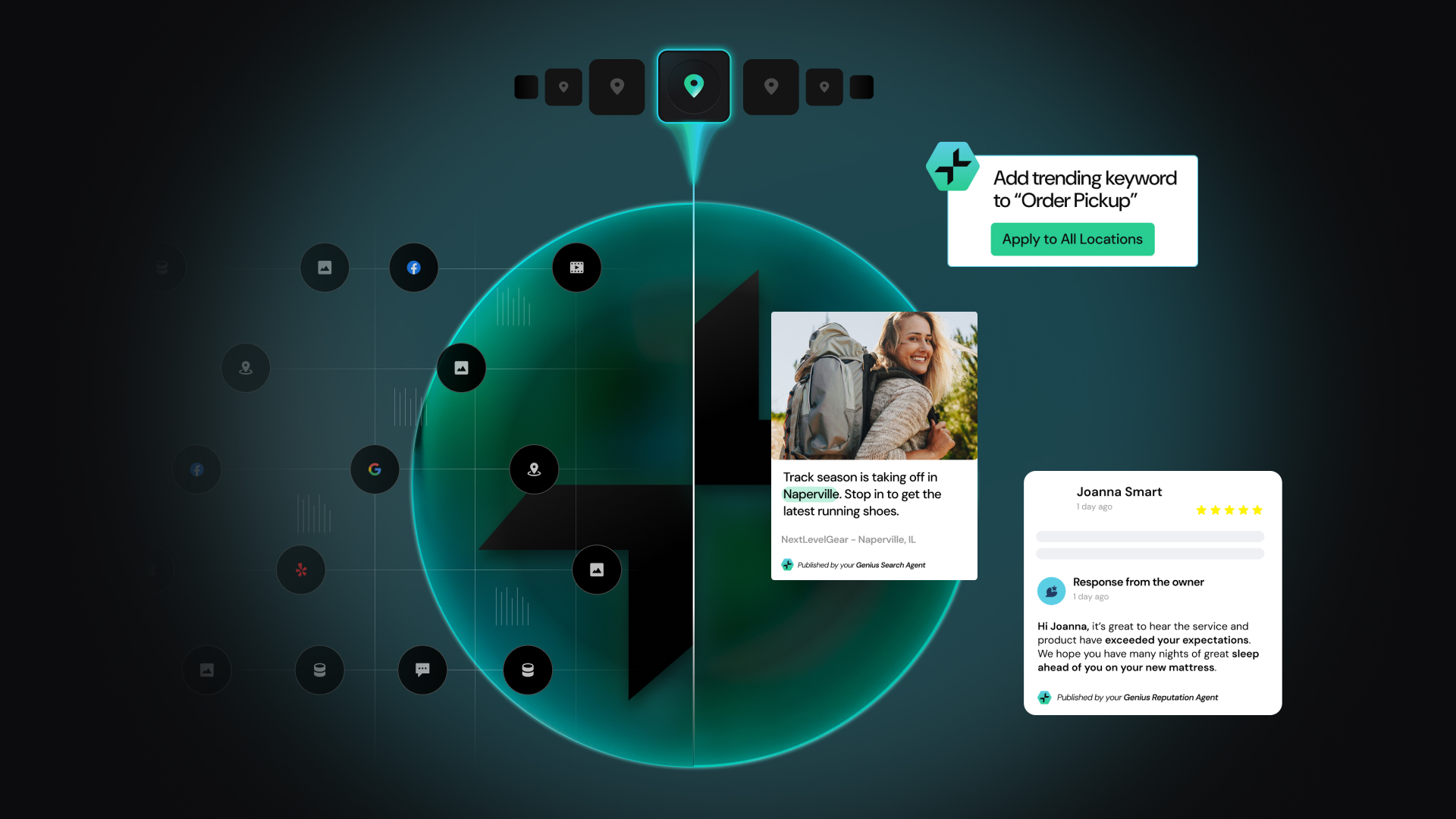
The biggest structural shift for 2026 is that AI-powered tools can now generate locally relevant, on-brand ad content at scale for franchise networks managing hundreds of locations. This solves a problem that’s dogged multi-location advertising for years: true localization at scale was previously either too expensive (professional local production everywhere) or too inconsistent (leaving it entirely to individual franchisees). AI-generated, brand-trained local variants close that gap without requiring either extreme.
What This Means for Your 2026 Social Ad Strategy
- Loosen creative approval processes enough to let raw, local, staff- and customer-generated content run as paid creative, not just organic posts.
- Shift ad budget toward short-form video formats if your current mix still leans on static images or long-form content.
- Treat localization as the floor, not the ceiling, and focus differentiation on execution consistency across every location.
- Evaluate AI-assisted local ad creative tools if you’re still relying on either fully centralized production or fully decentralized franchisee-generated content.
Social Media Advertising Trends FAQ
Which social platform is best for multi-location advertising in 2026?
Short-form video platforms, TikTok and YouTube Shorts in particular, are seeing the fastest ad inventory growth, but the right platform mix still depends on where your specific audience spends time.
Do multi-location brands need separate ad creative for every location?
Not entirely from scratch. Most brands now use a hybrid approach: a brand-approved template or framework that gets localized with location-specific details, imagery, or offers, often assisted by AI tools built for that purpose.
Is polished, professionally produced ad creative no longer effective?
It’s not that produced creative stopped working, it’s that unpolished, authentic local content is now consistently outperforming it in engagement and conversion, especially on video-first platforms.
Run Local Ads at Scale, On Brand, Everywhere
SOCi’s Ads & Boost helps multi-location brands run scalable, localized paid social campaigns without a manual creative build for every location. Learn more about Ads & Boost or request a demo.
Related Articles