Business Directory Listings: The Complete Guide
Share


Summary
This guide explains what business directory listings are, why NAP (name, address, phone) consistency is a core local search ranking signal, and which directories matter most, led by Google Business Profile, Apple Maps, Bing Places, Facebook, and Yelp. It covers how duplicate or outdated listings hurt visibility, plus how multi-location brands automate listing accuracy at scale.
Business directory listings are the digital footprint that tells search engines and customers where you are, what you do, and how to reach you. Get them right and you show up when people search nearby. Get them wrong and you vanish, or worse, you confuse the algorithms that decide local rankings. This complete guide covers what business directory listings are, which directories matter, why consistency is everything, and how multi-location brands manage listings at scale.
Key Takeaways
- Business directory listings are online entries containing your name, address, phone, and other details across the web.
- Consistent listing data (NAP) is a core ranking signal for local search.
- A handful of major directories drive most of the value, but niche and industry directories matter too.
- Inaccurate or duplicate listings actively hurt visibility and customer trust.
- Multi-location brands need automation to keep hundreds or thousands of listings accurate.
What Are Business Directory Listings?
A business directory listing is an online entry that describes your business: name, address, phone number, website, hours, category, and often photos and a description. These listings appear on search engines, maps, review platforms, and industry-specific directories.
Each listing is a chance to be found. Together they form the data layer that search engines cross-reference to decide whether your business is real, established, and worth showing to nearby searchers. The more consistent and complete your listings, the more confident the algorithm becomes, and the higher you rank.
Why Business Directory Listings Matter for Local SEO
Search engines want to send users to accurate, trustworthy results. They build that trust partly by checking whether your core details match everywhere they appear. This is where NAP consistency comes in.
NAP: The Foundation of Listings
NAP stands for Name, Address, and Phone number. When your NAP is identical across every directory, search engines treat the data as reliable. When it varies (a suite number here, an abbreviated street there, an old phone number somewhere else), the algorithm hesitates, and your ranking suffers.
Consistent listings deliver:
- Higher local search visibility
- Greater trust from search engines and customers
- Fewer missed visits from wrong addresses or dead phone numbers
- A stronger foundation for reviews and engagement
The Directories That Matter Most
You do not need to be on every directory in existence. You need to be accurate on the ones that drive traffic and feed the broader data ecosystem. Here are the essentials.
- Google Business Profile The most important listing by far, powering results in Google Search and Maps. Best for: Every business, as the non-negotiable starting point.
- Apple Maps (Apple Business Connect) The default map for hundreds of millions of iPhone users. Best for: Any business wanting visibility with Apple device users.
- Bing Places Microsoft’s local listing service, feeding Bing search and Maps. Best for: Reaching the meaningful share of searches that happen outside Google.
- Facebook A listing and discovery surface with massive reach and social proof. Best for: Brands building local community and engagement.
- Yelp A major directory and review site, especially influential for dining and services. Best for: Restaurants, retail, and consumer services.
- Bing, Yahoo, and data aggregators Listings that feed broad swaths of the directory ecosystem behind the scenes. Best for: Ensuring downstream accuracy across many smaller sites.
- Industry and niche directories Category-specific sites such as legal, medical, home services, or hospitality directories. Best for: Businesses whose customers search vertical-specific platforms.
How Bad Listings Hurt Your Business
Inaccurate listings are not neutral. They actively cost you customers and rankings. The common failures:
- Duplicate listings confuse search engines and split your reviews and authority.
- Outdated hours send customers to closed doors and generate angry reviews.
- Wrong addresses or phone numbers route people away from you entirely.
- Missing categories keep you out of relevant searches.
- Incomplete profiles lose to competitors with photos, descriptions, and complete data.
Managing Business Directory Listings at Scale
For a single location, listings management is a manageable afternoon project. For a brand with dozens, hundreds, or thousands of locations, it becomes a relentless operational challenge. Every location has listings on every major directory, and every one needs to stay accurate as hours change, services expand, and addresses shift.
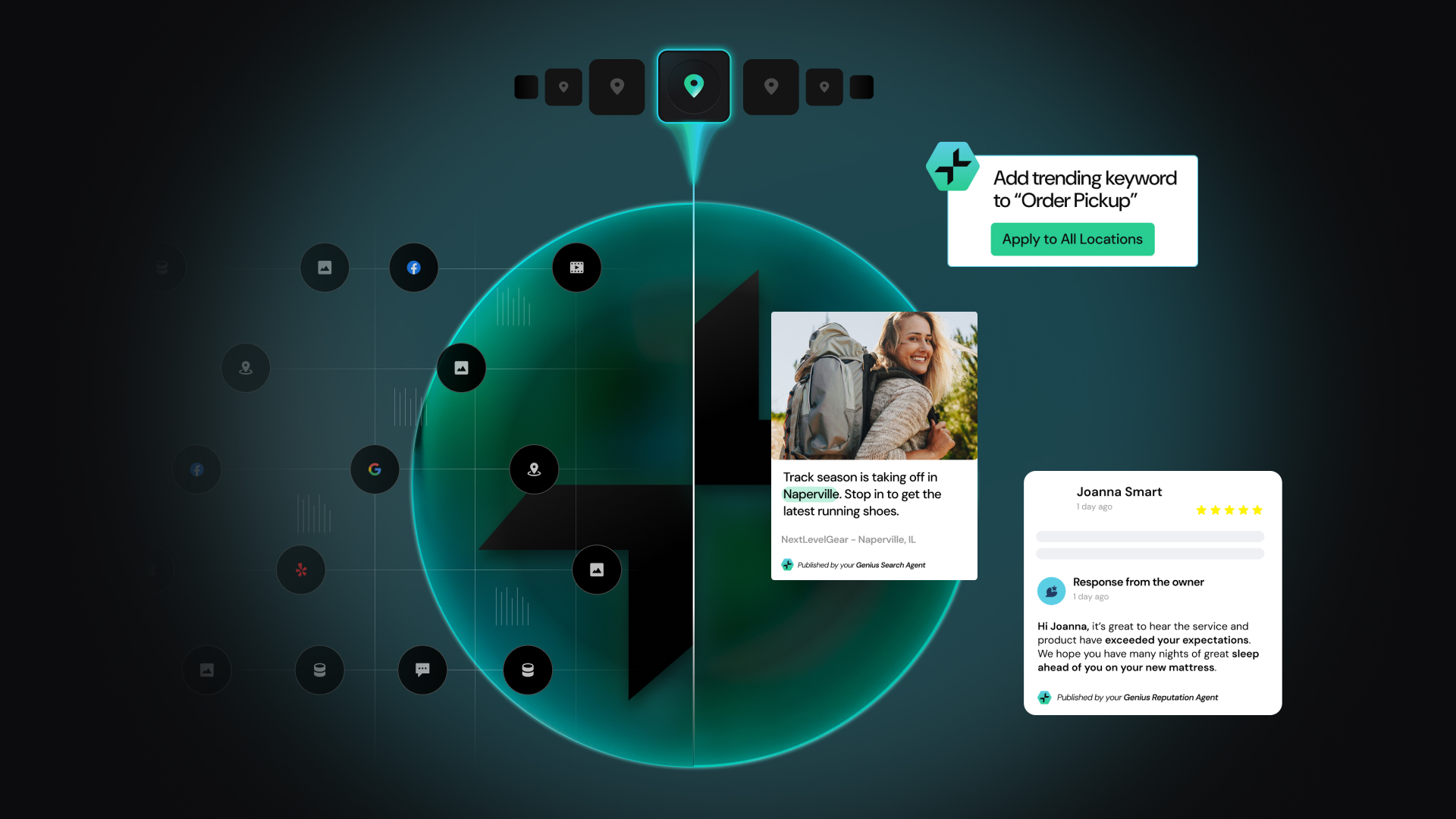
Doing this by hand does not scale. Spreadsheets go stale, logins multiply, and errors creep in faster than any team can fix them. This is exactly the problem SOCi’s Local Search Agent solves. It manages listings across the directories that matter, pushes accurate data everywhere at once, catches inconsistencies and duplicates, and keeps every location’s information correct without a human logging into a hundred dashboards. The result is the difference between software you manage and work that simply gets done.
Quick-Reference Checklist for Healthy Listings
- Claim and verify Google, Apple Maps, Bing, Facebook, and Yelp first.
- Standardize your NAP format and use it everywhere.
- Add complete data: hours, categories, photos, and descriptions.
- Hunt down and resolve duplicates.
- Set a process (or automation) to keep data current.
FAQ
What is a business directory listing?
It is an online entry describing your business with details like name, address, phone, hours, and website, published on search engines, maps, and directory sites.
Why is NAP consistency so important?
Search engines cross-check your name, address, and phone number across listings. Consistency builds trust and improves rankings, while inconsistency creates doubt and lowers visibility.
Which directories should I prioritize?
Start with Google Business Profile, then Apple Maps, Bing Places, Facebook, and Yelp. Add industry-specific directories relevant to your customers.
Do I need to be listed on hundreds of directories?
No. Focus on the major directories and the data aggregators that feed the rest, plus the niche directories your customers actually use. Quality and accuracy beat raw quantity.
How do multi-location brands keep listings accurate?
They use a listings management platform that updates data across all directories at once, detects errors and duplicates, and keeps every location consistent without manual logins.
Conclusion
Business directory listings are the foundation of local visibility. Accurate, consistent, complete listings help customers find you and help search engines trust you. Neglected ones do the opposite. For brands managing many locations, accuracy at scale is impossible by hand and effortless with the right Agentic Workforce behind it. See how SOCi’s Local Search Agent keeps every listing correct across every directory, so you show up exactly where your customers are looking.
Related Articles