Social Media Policy Templates for Multi-Location Teams
Share


Why Multi-Location Brands Need a Dedicated Social Media Policy
A generic, corporate-only social media policy doesn’t work for a brand with dozens or hundreds of locations, because it usually doesn’t answer the question local teams actually have: what am I allowed to post, and what needs to go up the chain first? Without clear rules, brands end up with one of two problems: local profiles that go silent because no one’s sure what’s approved, or local profiles that post off-brand or risky content because there was never a written policy to reference.
A social media policy built for a multi-location structure solves both problems by drawing a clear line between what’s decided centrally, what local teams can do independently, and what always needs escalation.
What to Include in Your Social Media Policy
1. Roles and Posting Permissions
Define, in writing, who can post on behalf of the corporate account versus each local account, and what level of approval, if any, local posts require. Most multi-location brands land on one of three models:
- Centralized: corporate creates and schedules all local content, with little or no local input.
- Hybrid: corporate provides approved templates and a content calendar; local teams adapt and post independently within those guardrails.
- Decentralized: local teams create and post their own content, guided by brand standards but without a pre-approval step.
Whichever model you choose, name it explicitly in the policy so there’s no ambiguity about who owns posting at each level.
2. Brand Voice and Messaging Guardrails
Spell out tone, terminology, and anything explicitly off-limits (competitor mentions, political commentary, unapproved promotions or discounts). Include a handful of real before-and-after examples: what an on-brand local post looks like versus one that misses the mark. Concrete examples travel better across hundreds of local social managers than abstract voice guidelines do.
3. Review and Comment Response Protocol
Reviews and comments are where most local social risk actually shows up. The policy should specify:
- Who is responsible for responding at the local level, and within what timeframe.
- Approved response templates for common scenarios (positive reviews, neutral complaints, service issues).
- What kinds of comments or reviews must be escalated rather than answered directly by the local team.
4. Crisis and Escalation Procedures
Define what counts as a crisis (a viral complaint, a safety incident, a legal issue, a PR-sensitive comment) and the exact escalation path: who gets notified, how fast, and who has authority to post or pause posting during an active situation. This section should name specific roles or teams, not just say “escalate to corporate.”
5. Legal and Compliance Guidelines
Cover the requirements that carry real legal exposure if a local team gets them wrong: advertising disclosure rules (FTC endorsement guidelines), accessibility of visual content (alt text, captions), data privacy when featuring customers or employees, and any industry-specific regulations (healthcare, financial services, and franchising in particular carry extra disclosure requirements).
6. Employee Personal Social Media Use
Address what employees can and can’t do on their own personal accounts when it comes to representing the brand: whether they can identify their employer, share company content, or post about their workplace, and what’s expected if they witness or are asked about a brand-related issue online.
Sample Policy Language
Here’s a short example of how one section might read in a finished policy document:
“Local location accounts may post independently using approved brand templates and messaging guidelines without pre-approval, except for content referencing pricing changes, safety incidents, or competitors, which requires review by the regional marketing manager before publishing. All reviews must receive a response within 24 business hours using the approved response library; any review alleging a safety or legal issue must be escalated to [role] immediately and left unanswered until reviewed.”
Rolling the Policy Out Across Locations
A written policy only works if local teams actually see and use it. Plan the rollout, not just the document:
- Build a one-page quick-reference version of the full policy for local managers who won’t read a long document day to day.
- Train new location managers on the policy as part of onboarding, not as a one-time companywide email.
- Revisit and update the policy at least annually, and any time a new platform, feature, or regulation changes the risk landscape.
Social Media Policy Template FAQ
Does every location need its own social media policy?
No. One policy should apply brand-wide, but it needs a section that clearly separates corporate-level rules from local-level permissions, so local teams know exactly what applies to them.
Who should be responsible for enforcing the policy?
Most multi-location brands assign a regional or corporate marketing lead to monitor compliance and handle escalations, while local managers are responsible for day-to-day adherence at their own location.
How long should a social media policy be?
Long enough to cover all six sections above with real examples, but short enough that a local manager will actually read it. Many brands pair a full policy document with a one-page quick-reference summary for daily use.
What happens if a local team violates the policy?
The policy itself should define this, typically a tiered response ranging from a coaching conversation for a minor first violation up to loss of local posting permissions for repeated or serious violations.
Keep Every Location On-Brand, Automatically
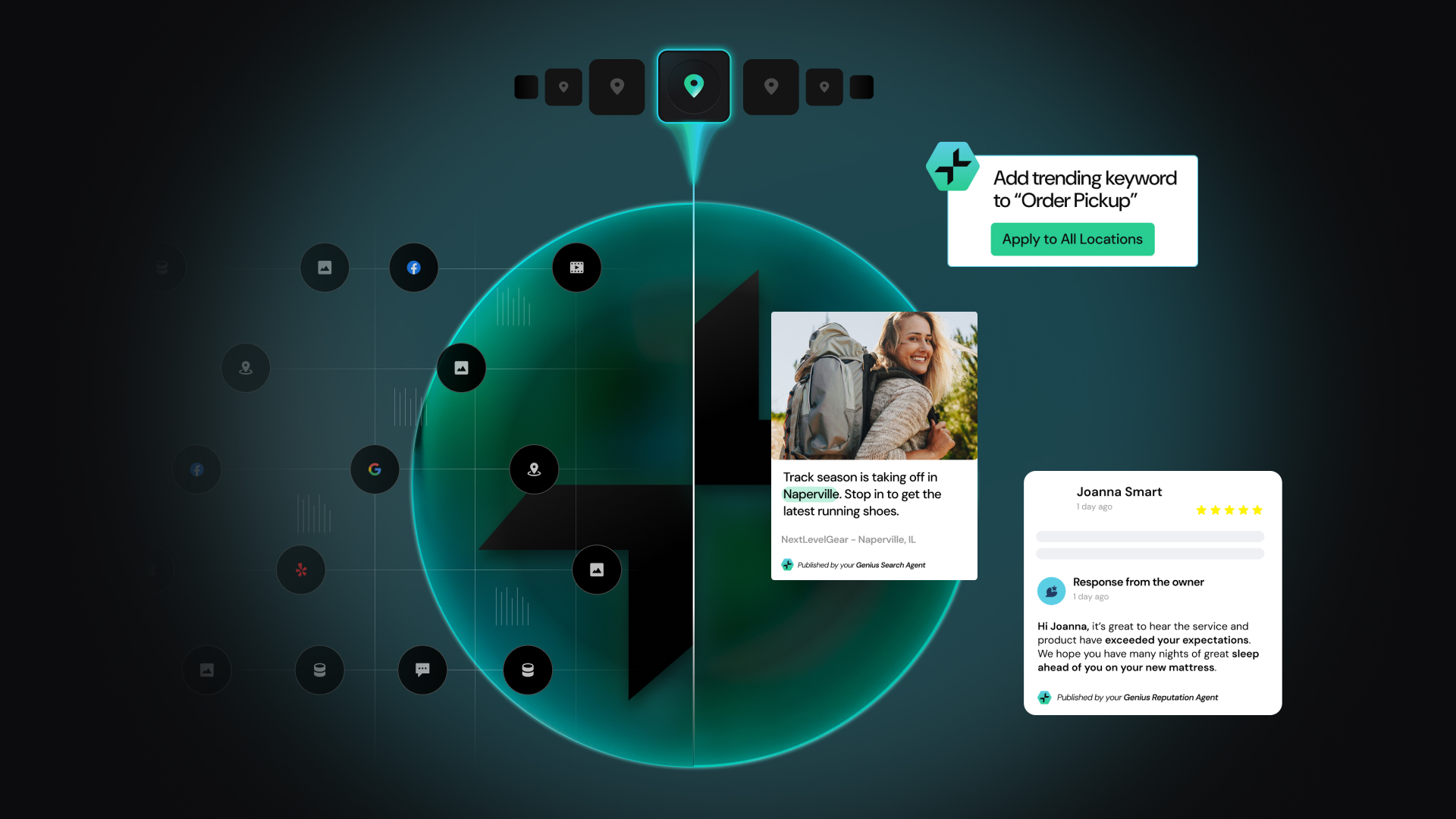
SOCi’s Genius Social Agent applies your brand voice and approval rules automatically across every local profile, so local teams can post confidently without a manual review step for every piece of content. Request a demo to see it in action.
Related Articles